FlemingClans.com

"Scotland's Fleming Clan: a Genealogical History" - coming in 2027!
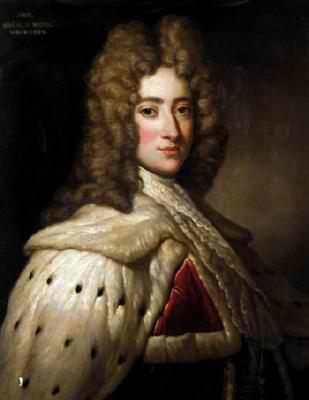 17th chief - John Fleming, 6th Lord Fleming and 1st Earl of Wigtown
(1567 - 1619)
Basic information about this person: \click here\
John Fleming inherited a forfeited and debt-ridden estate as a five-year-old boy. Through patience and royal favour he recovered everything his father had lost, and in 1606 King James VI revived the earldom of Wigtown for him, more than two centuries after the first earldom had been sold.
A forfeited inheritance
John was born in 1567, the only son of John, 5th Lord Fleming, and Elizabeth Ross, heiress of Lord Ross. In June 1568, when he was an infant, Boghall Castle was surrendered to the king’s army, and his father was later forfeited for his loyalty to Mary, Queen of Scots. When his father died in 1572, the family estates were in the hands of the crown.
Under the Pacification granted to the late queen’s supporters, John was restored to his father’s estates in November 1579, and in 1580, after eight years in the king’s ward, he took sasine of Lenzie, Cumbernauld, Biggar, Thankerton and the family’s other lands. Parliament confirmed his full reinstatement in 1584. Even so, his father’s devotion to the queen had left the family in deep debt, and in 1583 he was struggling on a small income.
Usher to the King
In 1583 King James VI appointed John Usher of the Royal House for life, and in 1587 he was granted the office of janitor and principal usher of the king’s house and bedchamber heritably, an office described as held by the Lords Fleming “since beyond the memory of men”. In 1589 his lands were erected into the lordship of Cumbernauld, with Biggar and Kirkintilloch as burghs of barony.
John was part of the committee that welcomed the king’s new bride, Anne of Denmark, in May 1590, and in October 1590 he went as ambassador to King Christian IV of Denmark and to the Dukes of Mecklenburg and Brunswick.
A turbulent nobleman
Like many of his peers, John was not always on the right side of the law. In 1587 and again in 1593 he was ordered into ward in Stirling and Blackness Castles after his men were accused of shooting and wounding the king’s subjects. In 1592 the English listed him among the Catholic nobility of Scotland, and in 1596 the presbytery of Lenzie charged him with not attending the Sabbath service. He was also drawn into the long feud with the Tweedies of Drumelzier.
In 1596 he settled his estates on himself and his heirs male, whom failing on Alexander Fleming of Barochan and then on the nearest male heirs bearing the name and arms of Fleming. In 1600 he bought the barony of Herbertshire from Sir William Sinclair of Roslin for fourteen thousand merks.
Earl of Wigtown
When James VI became King of England in 1603, John went to London as a member of the Scottish Council. On 19 March 1606, by a patent signed at Whitehall, the king created him Earl of Wigtown, Lord Fleming and Cumbernauld, and he was formally invested at Perth on 1 July 1606. The title recalled the earldom first held by Malcolm Fleming of Fulwood in 1341.
As earl he served on royal commissions dealing with church lands and ministers’ stipends, sat among the Lords of the Articles, became a Justice of the Peace and a Commissioner of the Exchequer, and was a member of the Privy Council. He was one of the nobles the king consulted as he worked to bring bishops back into the Church of Scotland. In October 1614 he intervened to stop a mob attacking the Jesuit John Ogilvie in Glasgow.
Family and legacy
John married first Lilias Graham, daughter of the Earl of Montrose. Their children included his heir John, James of Boghall, Alexander, and daughters Jean (Lady Loudoun), Anna, Margaret, Lilias, Mary and Rachel. His second wife was Sarah Maxwell, daughter of Lord Herries, by whom he had daughters Sarah and Jean. He paid generous dowries for his daughters, including 21,000 merks when Jean married Lord Loudoun.
John was last recorded in the Privy Council on 12 August 1619 and died soon afterwards. His nickname, “the Arbitrator”, reflects the many disputes he helped to settle. Having begun life as the son of a forfeited traitor, he ended it as an earl, with the family’s fortunes fully restored.